Thursday, 11 April 2013

Rainham's oiled Red-throated Diver has probably had it's chips. Or has it?


Bradder's had kindly offered to take me over to the KGV where he'd bagged the female Scaup, which I need for the PLL (Pointless London List), on the way we dipped the Garganey at the Ingrebourne, but had ticked off the Red-crested Pochard on the Berwick Res.  Just entering the North circular round about, I read out a tweet from Shaun.  Red-throated Diver, Rainham. No choice really, we turned back to the east. An RTD is pretty mega anywhere in London, especially on the river. this one was apparently close to the shore in Aveley Bay (that should have started alarm bells ringing). After spending 5 hours for a minutes view of an RTD just the other week one pops up ("showing well") at the second patch.


It soon became clear that this was a sorry looking diver, oiled on cheek and round the vent and when it rose up out of the water to try and flap its wings they looked like old rags.  I have not felt this hopeless and sad for another creature in a long time (Little Swift day springs to mind), it was quite clearly on its way out.  It dragged itself on to the mud on a couple of occasions, which inadvertently might have helped clean some of the oil off, but all in all the prognosis was not good. In preening it would have swallowed oil which would be then burning away at its insides, while it's water proofing would have been compromised to the extent that hypothermia would be inevitable.  I tried calling the RSPCA, but there nearest branch was in Camberwell and it was closed.  They would have needed a boat anyway.  We watched as it floated around the bend in the river, all joy evaporated.

News though a few days later of another diver, apparently less oiled, around Putney could mean it made a bit of a recovery, or, hopefully not, a second bird damaged by our complete disregard for our environment. Here's hoping it and the Rainham bird are the same and it might yet survive, or at least get the care and attention it needs.

 Cetti'sWarber, IngrebourneValley

 On Tuesday I made the tortuous journey to a park in south London where a Ring-billed Gull was meant to have been seen, whether it had or not I have no idea.  It took me so long to get there I had 10 minutes to hoof it round the rather attractive little park, it has to be said, and only got this 1st winter Common Gull for my efforts. The Collins highlights the problem of ID at this stage of the alike species.  A stout bill and and pale fringes to wing feathers were the helpful annotations.  Mine unfortunately showed a bill that was just not stout enough. Unless I am completely wrong again!


Above g(grrr)ull at Beckenham

 Above 1st winter Common Gull, Wanstead

Missed a Mandarin there too.

So now a third of the way through the year I am currently 22 behind Mr Connor, thanks to a Willow Warbler and Swallow on the patch this morning.  He managed 25 new birds in April, so far I've racked up 7.  Some work needed I think.


Wednesday, 3 April 2013

Off the beaten track in Uganda (a bit).


 I’ve just got back from a Naturetrek trip to Uganda. I like Naturetrek for two reasons – they include the airfare in the price and most of their clientele are even older and at just as amateur as I am.

First up was a stonking great Shoebill

Aah! On to an overnight in a superb lakeside lodge in QE Park, then on to a forest lodge in the Kibale forest. All good, with time to get to grips with some East African, and a sprinkling of West African birds. Uganda is on the African Rift Valley and so has a good selection of birds from the East and West, not to mention about 40 Albertine Rift endemics, but they’ll have to wait for another trip. Here’s a common roadside bird to be getting on with:


Grey-headed Kingfisher

One afternoon we were walking along the forest road in Kibale with our excellent guide Emmy Gongo. He goes quiet, leans forward, frowns and says Gosh! All is quiet. Then he just says – Yes! He had just heard a displaying Green-breasted Pitta somewhere out there in the forest. Peter and David with their sandals on were less than keen but Dave and I follow Emmy as he dives in to the tangled undergrowth. A few yards in and we listen. I can just make out a faint thrumming “prrrp”. Emmy goes to move the van up leaving me to lead Dave, who had yet to hear anything, further in towards the faint intermittent sound. A little later and Emmy arrives back and we continue down to a muddy valley and up a ridge. We’re getting closer, and despite crashing through the thick understory, we can hear the sound of the wings being fluttered in the display when we stop. Peering around and getting closer still, but then it all goes quiet – the Pitta saw us first. We wait and the sound has moved along the ridge. More scrambling and we’re close again. Remarkably Emmy spots our tiny target through the multitude of plants. Dave leans down first and gets his view, then I lie down flat and peer through the branches. There’s a red belly with dark wings and diagonal bright silvery-blue patches, the birds back end visible sitting on a horizontal twig. That thrumming noise again and the birds head with dark centre stripe flutters up briefly into view, but then all goes quiet. When we final get back to the road Peter and Dave accept our manfully suppressed elation with fortitude, after all it was hell in the there. How did Emmy hear that small bird’s wings beating a quarter of a mile away from the road?

Some of our party then travelled onwards to Misindi in NW Uganda, an extension to the main trip. First day we visit the famous Royal Mile, a dead straight mile long avenue cut through thick forest and lined with magnificent tall mahogany, fig and ironwood trees. Raymond was our local guide, with Emmy able to sit back at least for a while. However in the afternoon we here a Buff-spotted Flufftail giving its rather odd drawn-out hoot:

http://www.xeno-canto.org/94051
  XC94051 Alan Collett recording from S Africa on xeno-canto

Raymond had been birding the Royal Mile for 15 years and had only seen a Buff-spotted Flufftail twice. We shrugged and moved on, but a little later a White-spotted Flufftail tooted:

http://www.xeno-canto.org/59074 
Marcell Claassen recording from Bwindi, Uganda on xeno-canto

These are slightly easier skulkers so into the bushes we went. It kept giving the occasional call so we lined up at the end of a path and Emmy did a flanking manoeuvre and started calling from across to the left. After a good five minutes a tiny dark movement to the right of the path, then nothing. Emmy continued his vocal gymnastics and after another five minutes out strides a rather beautiful White-spotted Flufftail and quickly crosses the open ground just 15 yds away.

Stunning – Emmy returns and joins the celebration. Moving back towards the main drag we hear the Buff-spotted again – got to give it a go. We set-up on a different path – Emmy off to the left doing his Buff-spot  imitation. Nothing, a small movement of leaves, another call, nothing. More nothing for another few long minutes, then out struts a Buff-spotted Flufftail, slightly less rushed perhaps as it crosses the path, but at a similar distance. Amazing! A repeat performance, a two Flufftail day, upfront and out there in broad daylight.

Wot, no photos of the megas?

No, so have a few of the others ….


Square-tailed Nightjar


African Finfoot


Slender-billed Weaver for lunch

Abyssinian Ground-Hornbill

Thanks to xeno-canto for sound recordings

Bob Vaughan, March 2013


Wot I did on my holiday

Back to Uist shortly, but for now a little interlude...


Monday: after finding a Little Ringed Pullover on the flats and full of the joys of spring I spent 5 hours freezing my nads off looking for the Red Throated Diver on Staines Res. Just as I was giving up and throwing myself in the water, on the grounds it was probably warmer than I was, I jammed in on it having a bit of a fly around on the George VI. Thought it was coming back to the north basin but sadly it didn't.  Had to make do with a showy Back-necked Grebe in summer refinement, which steadfastly refused to to turn into the light, a female Long-tailed Duck and millions of Goldeneye.


Tuesday: Not having had enough of the cold wind I took Stevey T down to Rye for the Kentish Plover, a lifer for us both. Then after helping two elderly gents on to the bird, I cadged a lift down to Dunge, for another lifer for Mr Thorpe in the form of a couple of Great White Egrets.


Wednesday: Got me own GWE flying over the flats.  Mr Lethbridge was happy for me!

Following this programme there will be a short documentary on the Birds of Kenya by Mr Vaughan who has just returned from there, before joining us on the Bradder's Birding tour of the Hebrides.  Enjoy.

Sunday, 31 March 2013

Uist a taster!

Another Bradder's Birding Tour and another great 4 days spent touring the west coast of Scotand and in particular North and South Uist. 117 species in 4 days of great weather, great birds, great company and a great time.  Too many images and too knackered to do any more than a few nibbles before the main course.


Sunday, 24 March 2013

Good times, bad times


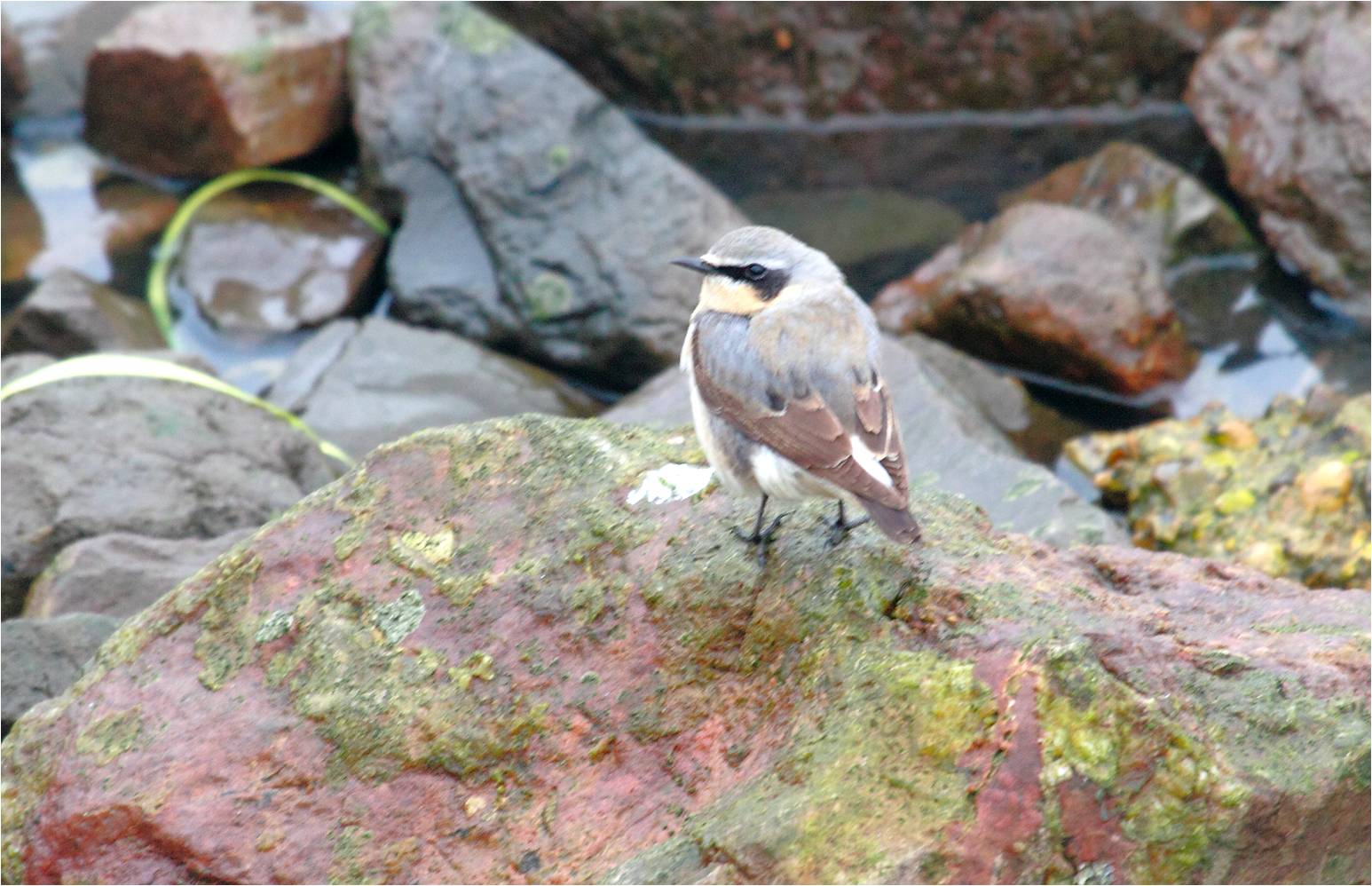
Having successfully missed Wanstead's second Stone Curlew this morning, I was a bit sad.  Happy that so many more got on to this enigmatic bird this time and especially for Jono, as it might encourage him to come out a bit more.  I should have seen it, I was about to turn towards the stoney part of the SSSI when "next day" Keith spotted some people waving at us, he presumed (they were dog walkers it turns out), so he encouraged me against my own better judgement to go with him. I needed a pick-me-up, and only a Wheatear would do.  That meant Rainham, since I couldn't find ours yesterday.


At Ferry Lane, I quickly found the female Black Redstart, and soon after one of the Wheatear, a first winter job but smart for all that. The second bird flew across the bay to the east.  Happiness! Further along I got a text from Bradders informing me of Scoter on the river, but going the wrong way. I'd thought the crappy weather would be influencing things on the river, but had hoped to see the results.


I checked the gulls on the pier by the barges.  Nothing interesting. Then I spotted a trio of Scoter high and going up river.  They appeared to be landing in the Ferry Lane bay, so I hoofed it back, flushing a female Stonechat on the way. No sign of the scoter, but then retracing my steps again, got another 4 heading Londonward. Sweet, Rainham and London Life tick.


A call from Bradders told of a Goosander on the river by the centre, and by the sounds of it doing what all ducks do so well: not a lot. I was on my way.


 I picked up the big duck just east of Aveley Bay and another or the same party of Scoter. Kerching another Rainham life tick.


 Then it all went a bit down hill, though 9 Ruff on Aveley was nice and my boots didn't get soaked.  On the way back I got a third Wheatear.  Happiness!